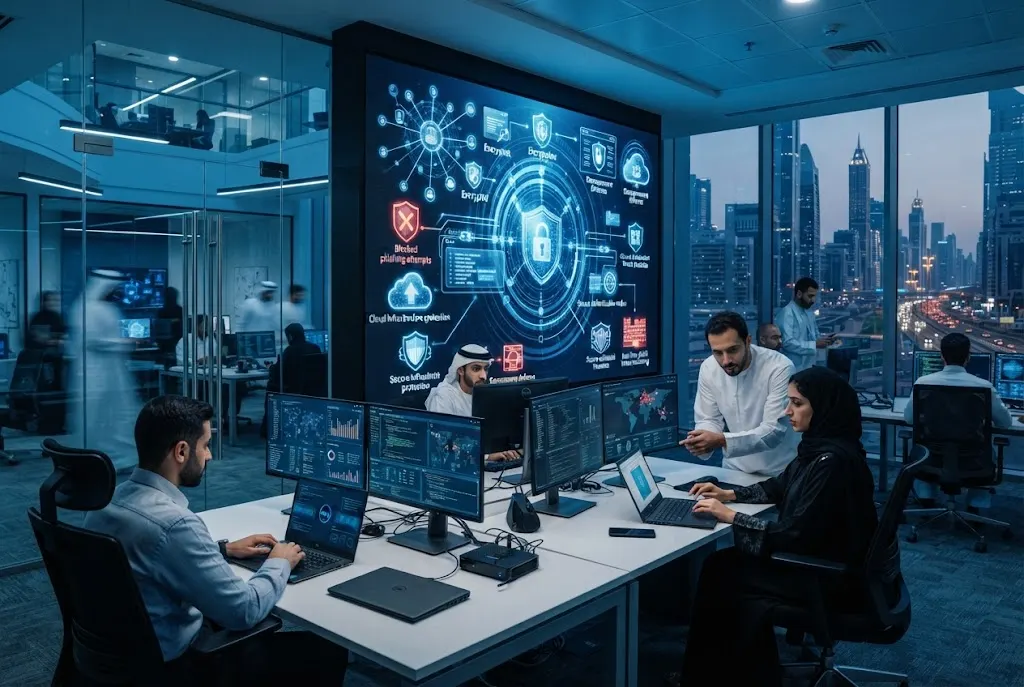
A practical security strategy does not necessarily require a large enterprise security platform. Small companies can build a strong foundation by combining endpoint protection, password management, multi-factor authentication, secure connectivity, backup systems, email security, and employee awareness. The right combination depends on the business model, number of users, devices, applications, and the type of information being handled.
What Should Small Businesses Look for in Cybersecurity Tools?
Before choosing a security product, businesses should identify their most important risks. A company operating primarily through cloud applications may have different priorities from a retailer running an e-commerce website or a consultancy managing confidential client documents.
The most useful cybersecurity tools generally provide a balance of protection, usability, centralized management, scalability, and cost. Small businesses should look for solutions that can be deployed without requiring a dedicated security team.
Businesses should also consider how cybersecurity fits into their wider technology environment. For example, companies using cloud storage platforms, SaaS applications, online accounting systems, CRM software, and remote-work tools need security controls that cover both local devices and cloud accounts.
1. Endpoint Security and Antivirus Tools
Endpoint security should be one of the first layers of protection for a small business. Laptops, desktops, and other connected devices can become entry points for malware, ransomware, credential theft, and other attacks.
Modern endpoint protection goes beyond traditional virus scanning. Many solutions include behavioral monitoring, malicious-file detection, web protection, exploit prevention, and centralized administration. This allows a business owner or IT administrator to manage security across multiple devices instead of configuring every computer separately.
For organizations with employees working from different locations, centralized endpoint management is particularly useful. It can help administrators identify unprotected devices and respond more quickly when suspicious activity is detected.
2. Password Managers
Weak or reused passwords remain a major business security concern. Employees may use the same credentials across several services, making a single compromised account potentially useful to an attacker.
A password manager provides a secure way to generate, store, and manage strong passwords. Instead of remembering dozens of credentials, employees can use a protected vault and a strong master credential.
Businesses should look for password managers that support organizational administration, secure sharing, multi-factor authentication, access controls, and employee account management. A dedicated guide to the best password managers for UAE users can help businesses evaluate this layer in more detail.
Password management should also be combined with multi-factor authentication wherever possible. A stolen password is significantly less useful to an attacker when another authentication factor is required.
3. Multi-Factor Authentication
Multi-factor authentication, or MFA, adds another verification step when a user signs into an account. Depending on the service, this may involve an authenticator application, security key, biometric method, or another approved factor.
For small businesses, MFA should be enabled first on high-value accounts such as email, cloud administration, financial platforms, website management systems, and business productivity services.
Administrators should also prioritize MFA for accounts with elevated privileges. Protecting administrator credentials can reduce the potential impact of a compromised employee account.
4. Business VPN and Secure Remote Access
Remote and hybrid teams introduce additional security considerations. Employees may connect from homes, hotels, shared networks, or other locations where the organization has limited control over the network environment.
A reputable VPN can provide encrypted connections and help employees securely access business resources. However, businesses should avoid treating a VPN as a complete cybersecurity solution. It does not replace endpoint protection, MFA, secure passwords, patch management, or employee training.
Companies evaluating this layer can also review VPN services for UAE users as part of their broader remote-work security strategy.
5. Email Security Tools
Email remains an important attack channel because phishing messages can trick employees into revealing credentials, opening malicious files, or transferring money to fraudulent accounts.
Also, email security tools can help identify suspicious messages, malicious attachments, dangerous links, impersonation attempts, and other threats before they reach an employee’s inbox.
However, technology should be combined with employee awareness. Even a strong email security system cannot guarantee that every social-engineering attempt will be blocked.
Businesses should establish clear procedures for suspicious messages, payment requests, password-reset emails, and unexpected attachments. Employees should know how to report suspicious communications instead of interacting with them.
6. Firewall and Network Security
A firewall controls network traffic based on defined security rules. For businesses operating physical offices, network security can help separate trusted systems from potentially unsafe connections.
Modern firewall solutions may include intrusion prevention, application controls, web filtering, VPN capabilities, and network monitoring. The right configuration depends on the organization’s size and network architecture.
Small businesses should also regularly review connected devices. Unused accounts, outdated equipment, and unnecessary services can create additional exposure.
7. Backup and Recovery Tools
Backups are an important part of cybersecurity because prevention is not always enough. Hardware failures, accidental deletion, ransomware, compromised accounts, and other incidents can make business information unavailable.
A good backup strategy should protect important documents, databases, website files, configurations, and other critical business information. Businesses should also consider whether backups are isolated sufficiently from the systems they are protecting.
Cloud storage can support business continuity, but synchronization should not automatically be treated as a complete backup strategy. Companies should understand retention, recovery, versioning, access permissions, and restoration procedures.
Businesses comparing cloud infrastructure can also explore AWS vs Azure and understand how cloud platforms can fit into wider technology and security strategies.
8. Vulnerability Scanning and Security Monitoring
Security monitoring tools can help businesses identify suspicious activity, outdated software, exposed services, and other weaknesses. Vulnerability scanning can provide another layer of visibility into the organization’s technology environment.
This becomes increasingly important as businesses add websites, cloud applications, employee devices, e-commerce systems, APIs, and third-party services.
Small businesses should establish a regular review process rather than relying on a one-time security assessment. Software updates, newly discovered vulnerabilities, employee changes, and new applications can change the organization’s risk profile over time.
9. Web and DNS Security
Web and DNS security can help businesses control access to dangerous websites and reduce exposure to malicious domains. These tools can be particularly useful for organizations with employees who regularly browse the internet as part of their jobs.
DNS filtering can also help block known malicious destinations before a user connects to them. When combined with browser security, endpoint protection, and employee awareness, this creates additional defense against web-based attacks.
10. Security Awareness and Employee Training
Cybersecurity is not only a technology problem. Employees interact with email, websites, cloud applications, customer information, payment systems, and business accounts every day.
Security awareness training can teach employees how to recognize phishing, suspicious attachments, social engineering, unsafe passwords, fraudulent payment requests, and other common threats.
Businesses should make training practical rather than overly technical. Employees need clear instructions about what to do when something looks suspicious and whom to contact for help.
Common Cybersecurity Threats Small Businesses Should Prepare For
Small companies can face a wide range of threats, including phishing, ransomware, credential theft, malware, business email compromise, fraudulent websites, insecure devices, and data exposure.
UAE-based businesses should also understand the regional threat environment and the ways attacks can affect organizations operating through cloud platforms, e-commerce websites, financial applications, and remote teams.
Our guide to common cybersecurity threats in the UAE provides a broader look at the risks businesses should consider when developing their security plans.
How AI Is Changing Business Cybersecurity
Artificial intelligence is increasingly becoming part of both defensive security systems and the broader threat landscape. Security platforms can use automated analysis to identify unusual behavior, prioritize alerts, and assist security teams with investigations.
Small businesses do not necessarily need sophisticated AI security infrastructure of their own. Many modern security services incorporate automation and machine-learning capabilities into their existing products.
Businesses interested in the wider role of artificial intelligence can explore AI tools and learn how generative AI is changing modern technology workflows.
Cybersecurity Tools for E-Commerce Businesses
E-commerce businesses have additional security requirements because they may handle customer accounts, payment information, order data, websites, plugins, third-party integrations, and administrative credentials.
Website security, secure administrator accounts, regular updates, backups, payment security, and monitoring should therefore be treated as connected parts of the security strategy.
Businesses preparing an online store can also review e-commerce platforms for UAE businesses while considering the security features and integrations offered by each platform.
How to Build a Small Business Cybersecurity Stack
A small company does not need to purchase every security product available. The better approach is to build layers around the organization’s most important assets.
A basic security stack can include endpoint protection, a password manager, MFA, secure email, network protection, reliable backups, security monitoring, and employee training.
Companies with more complex requirements can add vulnerability management, centralized logging, advanced endpoint detection, identity management, DNS filtering, and incident-response capabilities.
Businesses should document who is responsible for each security control. A tool is much less effective when nobody checks alerts, applies updates, reviews accounts, or tests recovery procedures.
Security Practices That Should Accompany These Tools
Technology works best when supported by consistent security processes. Small businesses should regularly update operating systems and applications, remove unnecessary accounts, review administrator privileges, protect important data, test backups, and require stronger authentication for sensitive services.
It is also useful to maintain an inventory of business devices, applications, domains, cloud services, and important accounts. Knowing what needs protection is the first step toward protecting it.
Businesses that rely heavily on data should also understand modern data analytics environments and the security implications of collecting and processing business information.
Final Thoughts
The best cybersecurity tools for small businesses are not necessarily the most expensive or technically complex products. The right combination depends on the company’s size, infrastructure, employees, data, applications, and risk profile.
For many small organizations, a strong starting point is a combination of endpoint security, password management, MFA, secure email, network protection, reliable backups, monitoring, and employee training. These controls can then be expanded as the business grows.
Cybersecurity should also be treated as an ongoing process rather than a one-time purchase. Regular updates, account reviews, employee training, backup testing, and security assessments can help businesses maintain their defenses as technology and threats continue to change.
For additional technology guidance, explore the UAE TechZone homepage for more UAE-focused technology guides, comparisons, cybersecurity resources, and business technology insights.
For broader cybersecurity guidance, businesses can also consult the NIST Cybersecurity Framework to understand a structured approach to identifying, protecting, detecting, responding to, and recovering from cybersecurity risks.